Bridging adaptive and structural facets of ungulate skull evolution.
BRIDGE-US integrates fossil 3D data, geometric morphometrics, ecomorphology, and phylogenetics to understand how ungulate skulls evolved across deep time.

BRIDGE-US integrates fossil 3D data, geometric morphometrics, ecomorphology, and phylogenetics to understand how ungulate skulls evolved across deep time.
The Project
The project focuses on the evolutionary interplay between skull geometry and more labile craniodental traits, including dental morphology, mastication, headgear, tusks and other ecologically relevant features. Its ambition is to build an expansive fossil database sampled from museum collections worldwide.
The Team
The BRIDGE-US team combines expertise in ungulate macroevolution, taxonomy, fossil collections, geometric morphometrics, ecomorphology, phylogenetics, climate modelling and machine learning.
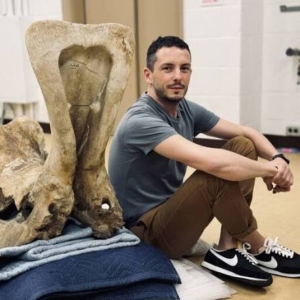
Paleobiologist focused on mammalian macroevolution, ungulate ecomorphology and diversification. In BRIDGE-US, he leads the study of broad evolutionary trends in the ungulate craniodental system and coordinates the integration of functional trait data.
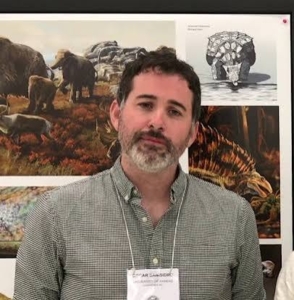
Researcher working at the interface of paleobiology, 3D morphology and macroevolution. In BRIDGE-US, he leads the development of the pan-ungulate skull geometry dataset, including 3D workflows, retrodeformation and geometric morphometrics.
Universidad Complutense de Madrid
Centro Nacional de Investigación sobre la Evolución Humana
Museum für Naturkunde Berlin
American Museum of Natural History
New York Institute of Technology
Museum für Naturkunde
Bayerische Staatssammlung für Paläontologie und Geologie
University of Cambridge
University of Fribourg.
Universidade Nova de Lisboa.
Estación Biológica de Doñana
IANIGLA-CONICET
IANIGLA-CONICET
Transmitting Science
Universidade de Vigo
Universidad Complutense de Madrid
The Papers
Featured research
Soon published papers listed here.
The Research Lines
Soon published papers listed here.